"At Wärgön Innovation we work on development projects related to AI and automation. Our handheld FabriTell scanner assists us in demonstrating and developing automated textile processes by being simple and portable. NIRS plays a crucial role in enabling automated sorting of textiles."
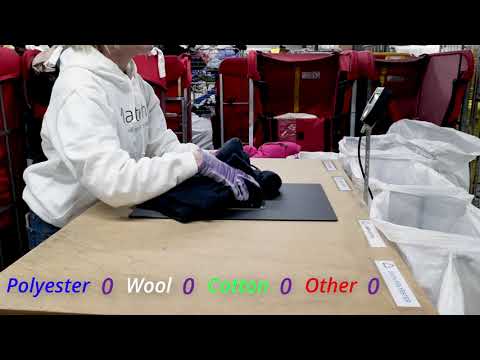
"This handheld FabriTell device will change the game in sorting. Within seconds, it displays the fabric compositions of the textile scanned, with precision. It lights up a different colour for different fibres — we don't need burn tests or any other tests conducted on each bale."
"We use the FabriTell machine mainly for analysing production scraps from textiles. When we don't get the composition from our customers it is a very useful machine for us to be able to identify the fibre."
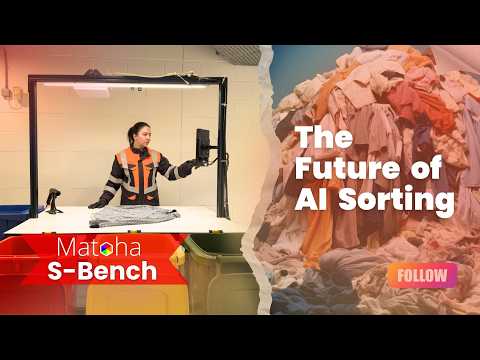
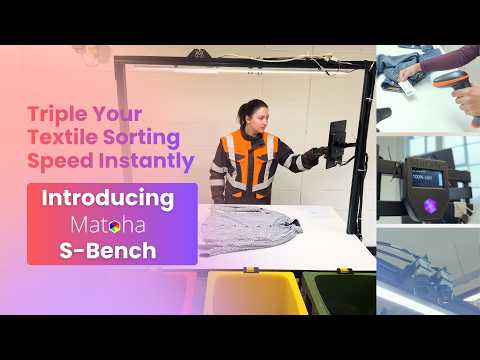
"Yodomo is excited to be one of the first in the world to apply new textile identification technology from Matoha. Textile identification is going to play an important role in increasing the chances of onward use of unused textiles, reducing waste."
"I did quite a bit of research and found that the FabriTell unit offers the best balance of features including software updates and portability. I can now verify the fabric composition of various items and ward off allergic reactions to certain garments."
"Textile identification devices based on Near Infrared technology made by Matoha are a game changer in our sorting for recycling process. Separating pure material from blended fabrics and sorting by specific blend variations will help us a lot in the new recycling projects we are working on."
"The Matoha scanner was a big hit with the exhibition attendees and people were very keen to use it and learn more about the technology. It was also a great conversation starter for educating people more about the state of the industry."
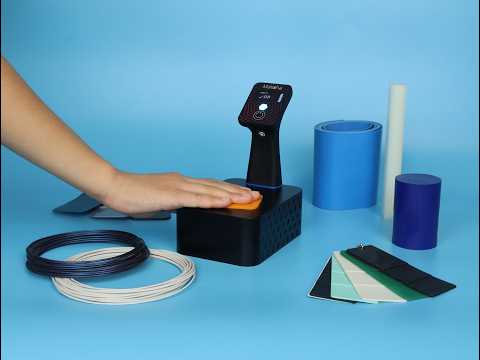
"I love our spectrometer! There's lots of plastic material that we formerly had to turn away because it was unmarked. Now we can take almost all of the unidentified material. Since we collect over 8,000 pounds a month, the amount of saved plastic is significant."
"The PlasTell has become one of our favourite teaching tools. We use it from undergraduate practical classes to PhD training and public outreach events. It provides an engaging and intuitive way to introduce polymer identification, plastic sorting, and recycling to audiences ranging from university students to 5-year-old children."
"We chose to invest in 3 PlasTell devices for the INdIGO Interreg Project. We found the device so easy to use and able to take out onto the field with us to quickly identify fishing gear material and help with the recycling efforts in the south of England."
"We use the device mainly at colour development phase. We use it to demonstrate that our masterbatches will allow end products to be detectable. It is mainly used for our PET packaging customers."
"This little device is an absolute game changer for us in the workshop. We get a huge amount of plastic donated to us, a lot completely unmarked, so we have no idea what type of plastic it is and whether or not we're able to recycle it. Fortunately, the PlasTell sorts that issue out for us."
"The PlasTell is performing perfectly, and we are thrilled with the ease of use and the measurement speed. Your device has reduced the time it takes to identify contamination issues and means I don't have calls and messages at night anymore. It's also been the simplest training package I have had to deliver."
"The PlasTell machine has been performing brilliantly. Results are accurate and within seconds. We have used the machine extensively since we had it without any trouble so far. In fact we might pick up a couple more for our other locations."
"The machine is extremely user-friendly and anyone can use it. I love that it has an app that stores all previously analysed data. I tested the accuracy using known plastics and it determined the type accurately each and every time."
"We love using the PlasTell, it's been an absolute game changer! This nifty device means we can identify plastics quickly and easily, allowing us to recycle plastic with confidence and bring it into a closed loop system."
"Highly compact, accurate and low-cost sensing — these three keywords describe our NIR PlasTell very well. At Omnicycle we use it to identify the different kinds of plastic assigned to us by our customers. The PlasTell accurately reveals the specific involved material."
"Our production manager is already using the PlasTell device and his comment is that we should have bought one earlier!"
"To recycle plastic waste from various sources it must be sorted and therefore identified. When we collect waste it is not sorted and sometimes in fragments, impossible to identify. That's why we used a little magic object: an NIR spectroscopy scanner. A big thank you to Matoha who developed this little gem!"
"We use PlasTell in our lab on a daily basis to identify polymers. It's in use 24/7. It works well and we didn't have a problem with it so far. It's very easy to use."
"Our NIR device continues to make waves, even after severe degradation in the oceans. It triumphs in identifying different plastics, contributing to a sustainable future."
"The new device is very great! We're thinking about integrating it into our small scale micro-factories."
"This nifty little machine can identify different types of plastic. We mostly recycle plastic we collect on beaches, and often the pieces are either not labeled or the labels are worn off. The PlasTell sorts that out for us."
Ready to get results like these?
Monthly insights on NIR technology, sorting efficiency, and EPR compliance.