Most feedstock, post-consumer or post-industrial, arrives with a label, a supplier's word, or nothing at all. Without a quick check at intake, you're recycling on trust.
By the time a contaminated bale reveals itself, in the output or in the machine, it's already in your process. Tracing it back to the source is slow and often impossible.
Pass contaminated fibre through and you get poor-quality output, recycled fibre that now has to compete with virgin fibre on quality. Or the contaminant jams or damages the line, and you get downtime instead.
The burn test is the realistic benchmark for a quick manual check, but it's destructive, hard to quantify, and too slow to run on every bale coming through the door.
FabriTell won't replace a lab's full wet-chemistry analysis, but for a quick check at intake, it's a faster, non-destructive step up from the manual burn test: no flame, no fumes, no waiting.
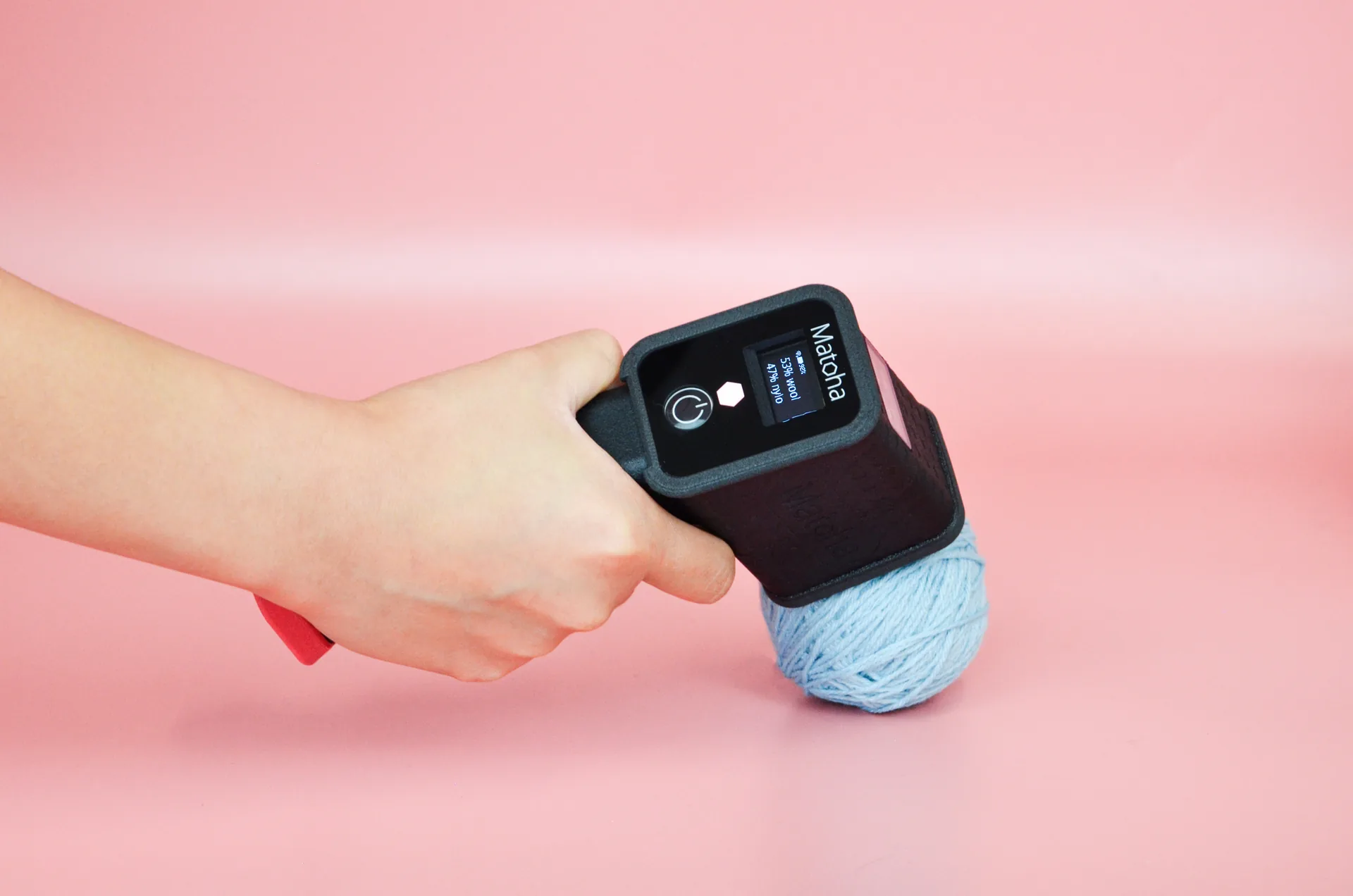
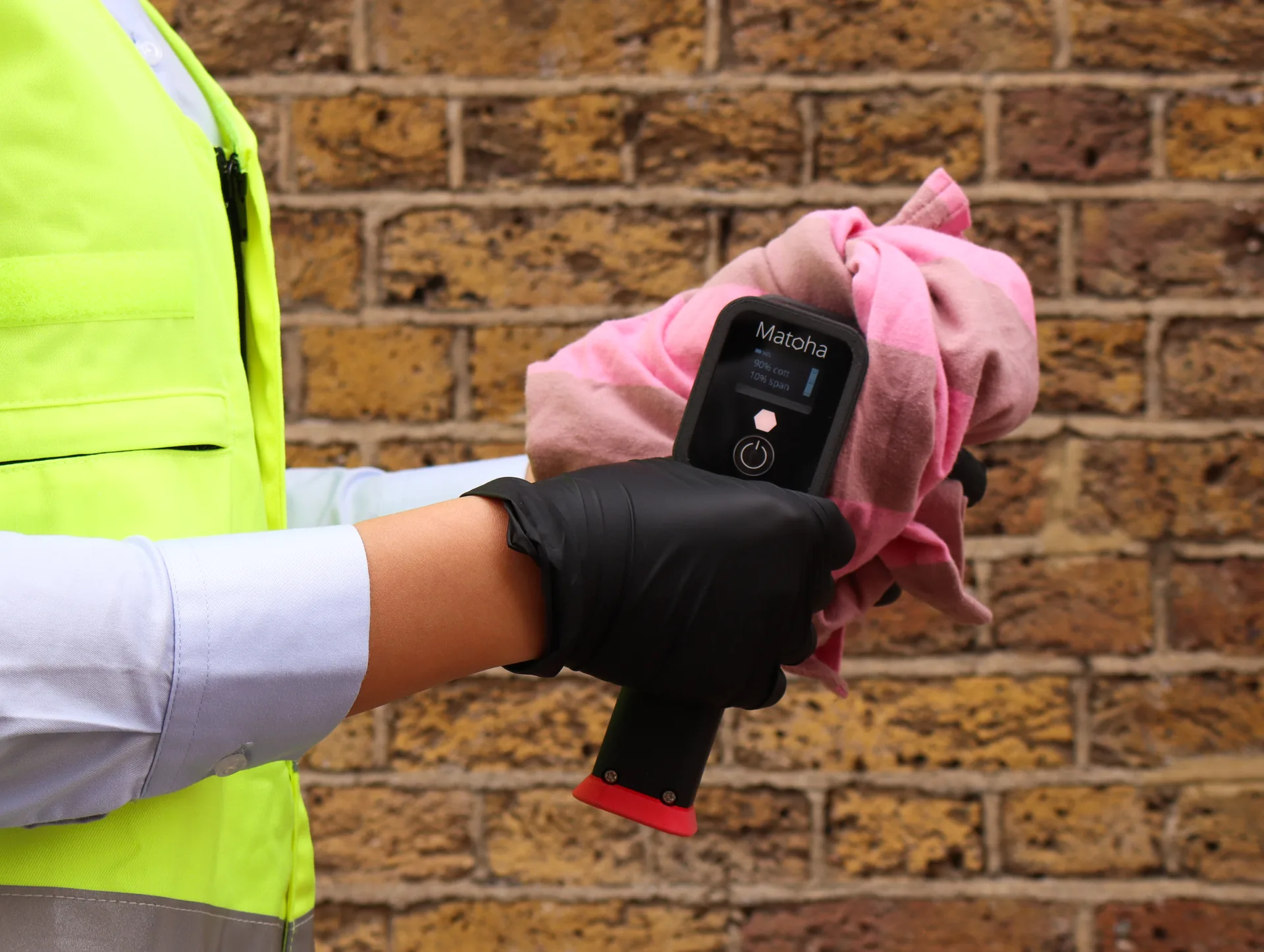
Press the device to a sample and get fibre composition back instantly, with a contamination detection threshold of 5–10% in pure material streams, in time to act before the bale enters your process.
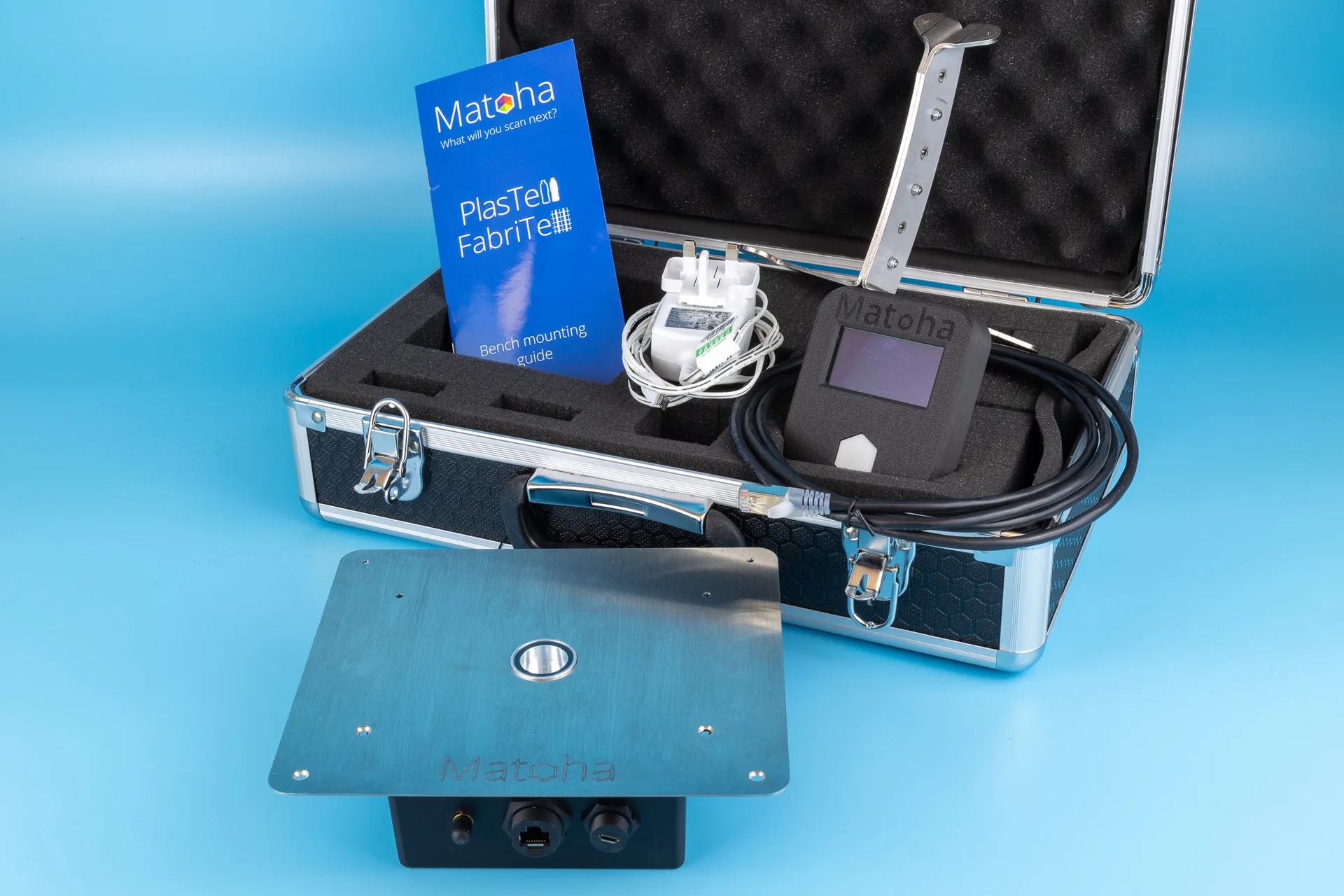
No bench, no sample prep, no lab. FabriTell goes to the loading bay, the goods-in area, or out to a supplier's site, wherever the feedstock first lands.
Each scan is timestamped and saved to Matoha Cloud with composition and contamination data, so every accepted bale has a record behind it, not just an assumption.
Recyclable fibre feedstock arrives at your facility, ready to enter the recycling process.
Most recyclers either assume the feedstock is compatible with their process, or validate it themselves. Right now, that validation usually means a label, a burn test, or nothing at all.
A single scan confirms fibre composition and flags contamination, before the bale goes any further into your process.
Contaminated feedstock passes through unflagged. Best case, it shows up as poor-quality output, recycled fibre now competing with virgin fibre on quality. Worst case, it causes downtime when the contaminant jams or damages the process.
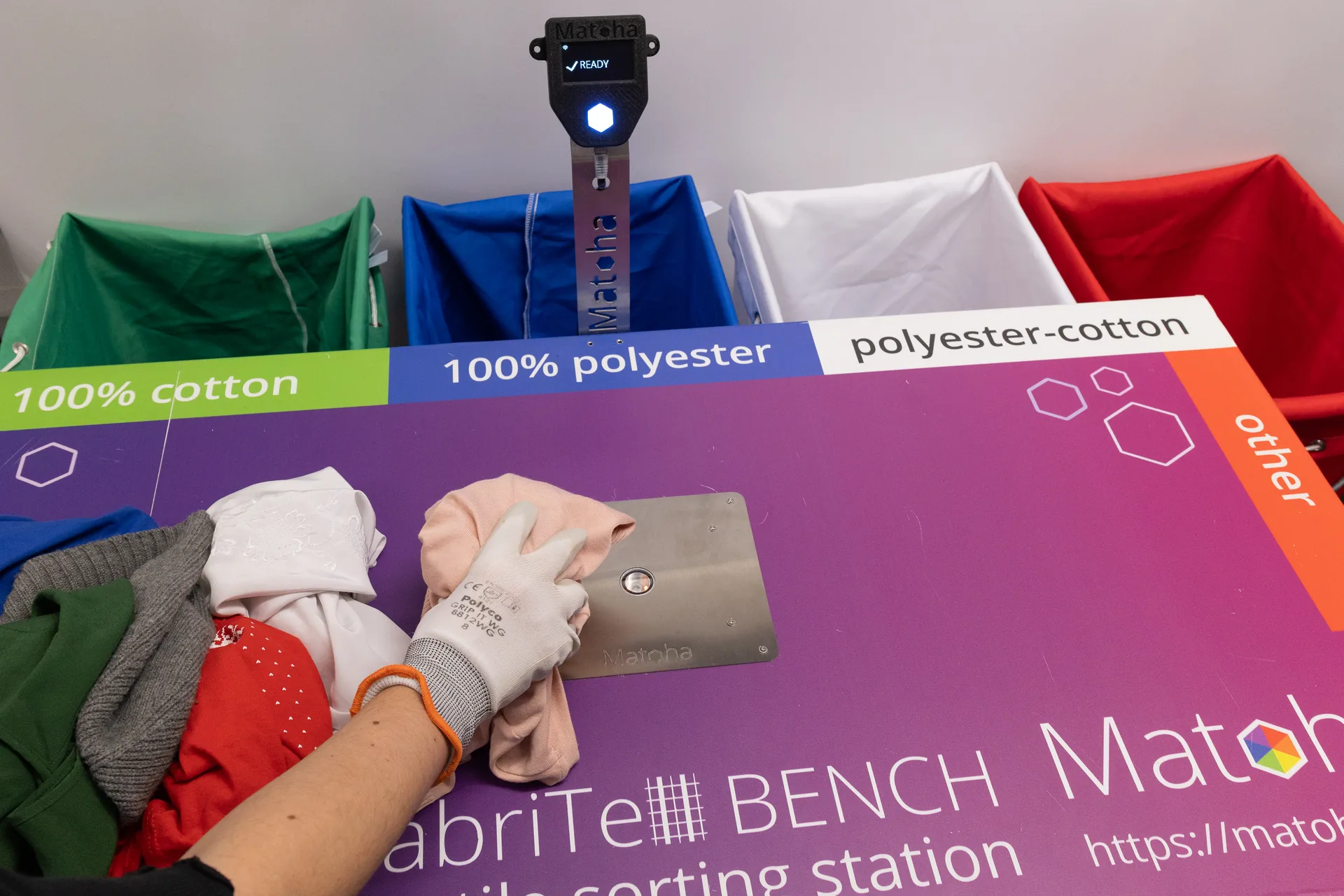
Low-contamination feedstock passes straight into your process with confidence. Anything flagged gets held, re-sorted, or queried with the supplier, before it costs you output or uptime.
Every FabriTell scan is logged to Matoha Cloud with composition, contamination flags, timestamp, and supplier reference, exportable evidence, not an opinion.
Recyclers are using their Matoha Cloud reporting to ask upstream feedstock suppliers to scan and certify composition with their own Matoha device before a shipment ever leaves, turning your contamination problem into a condition of doing business.
When a buyer or auditor questions a batch, you have a scan-level record to point to, not a re-test and a delay.
"A leading fibre-to-fibre textile recycler uses Matoha devices to verify and catalogue the material composition of every feedstock batch they receive, catching contamination before it enters their process, without bringing a lab to the loading bay."
Check incoming feedstock for fibre type and contamination at intake. Turn mixed-waste streams into reliable, traceable feedstock.
Verify garment composition before pricing for resale. Confirm silk, and wool authenticity. Replace cut-out labels with real data.
Field teams capture composition data with the mobile app to audit fabric waste streams and report back to donors.
Check returned garments at takeback desks without specialist staff. Instantly grade for recycling, reuse, or resale with zero training time.
Verify contractor shipments before they arrive via Matoha Cloud's API, so contaminated feedstock gets caught before it's accepted, not after.
Use FabriTell as a fast first-pass check on incoming material, then escalate borderline samples to full wet-chemistry analysis, a complement to lab testing, not a replacement for it.
Blend percentages measured to 1% increments, typically within ±10% accuracy.
See how FabriTell identifies textile fibres in a live demo, what results look like, how the app works, and how it fits your feedstock intake process.