In the FieldReal devices,
Real devices,
real donation centres
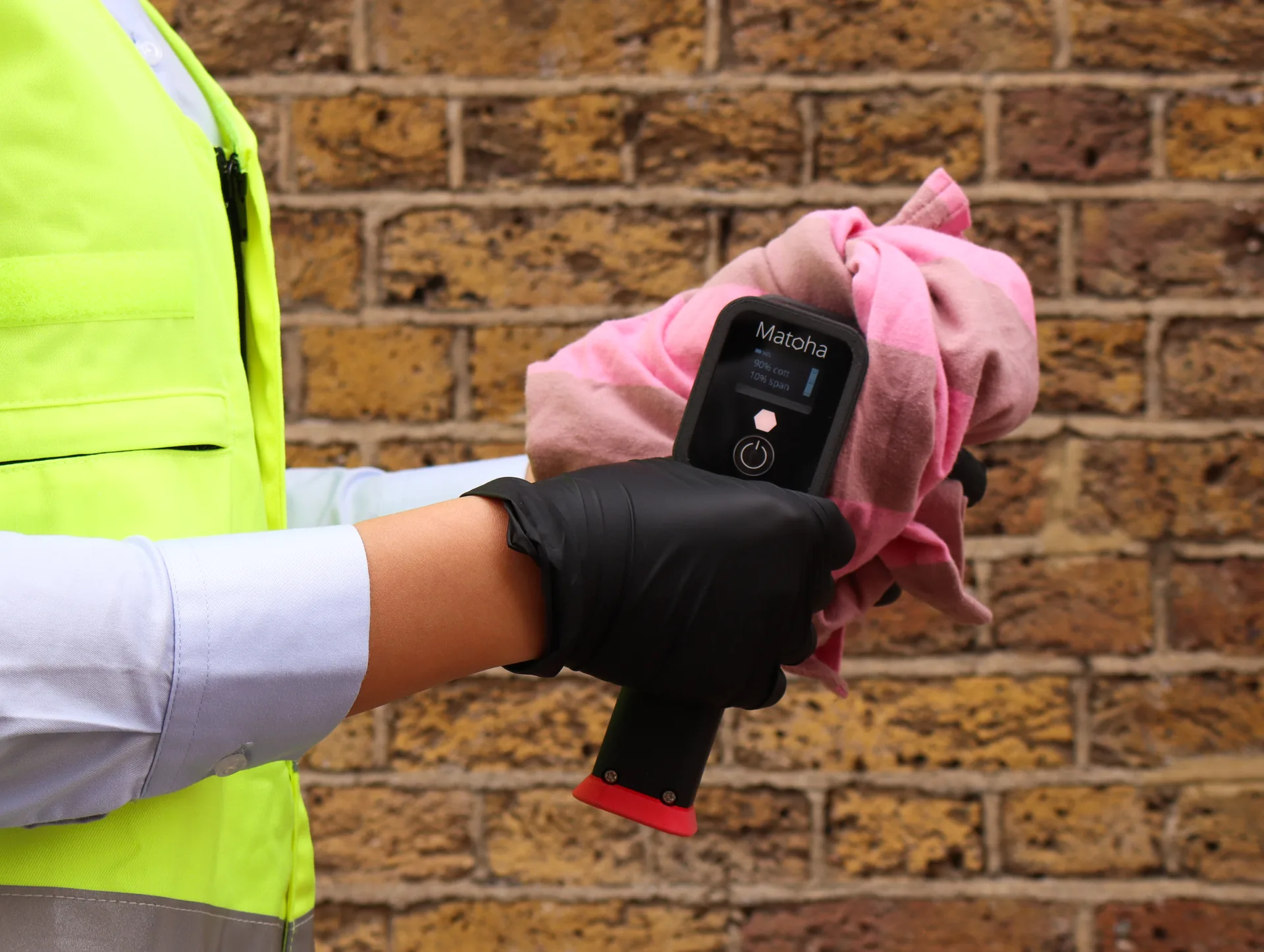
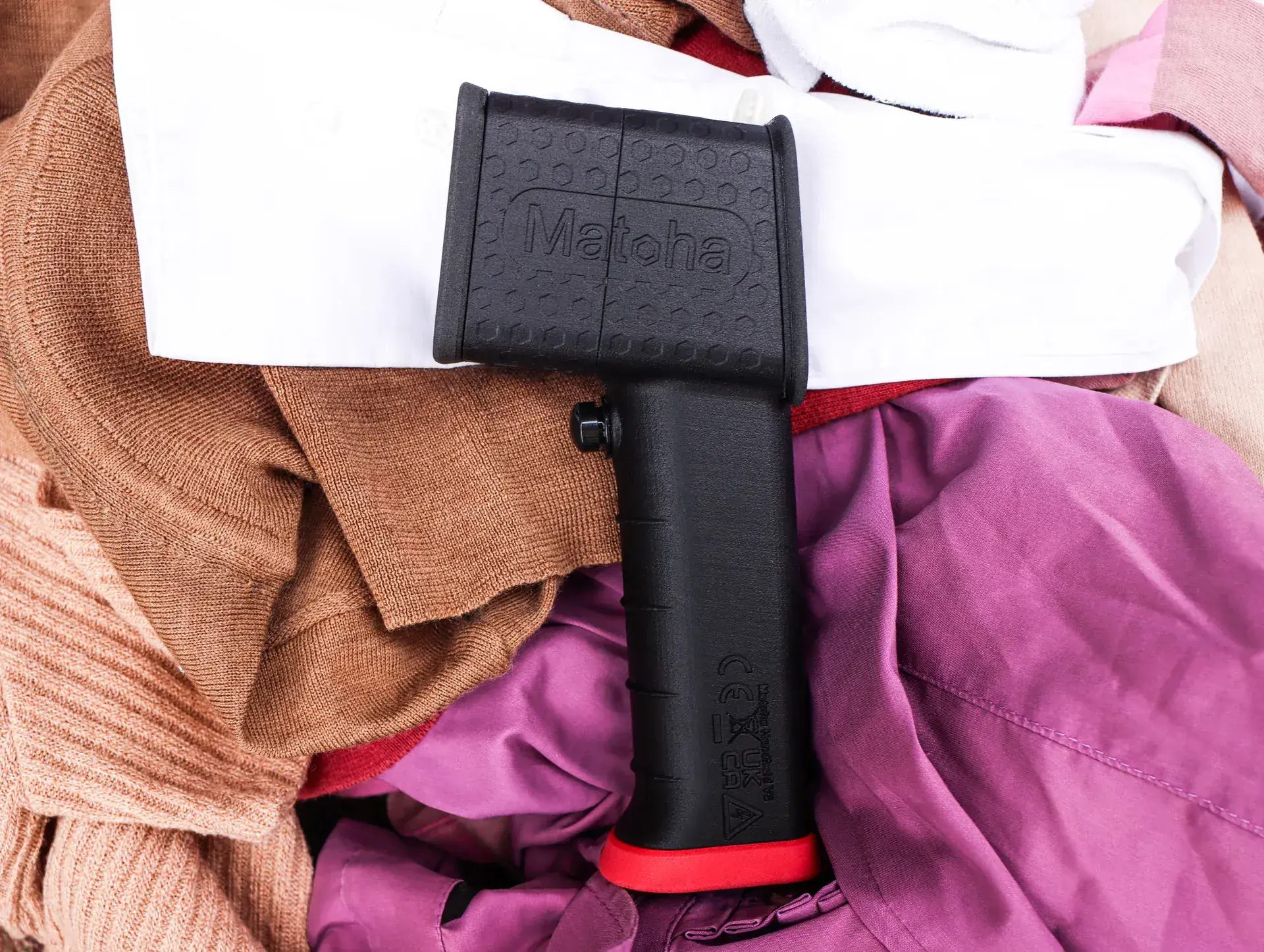
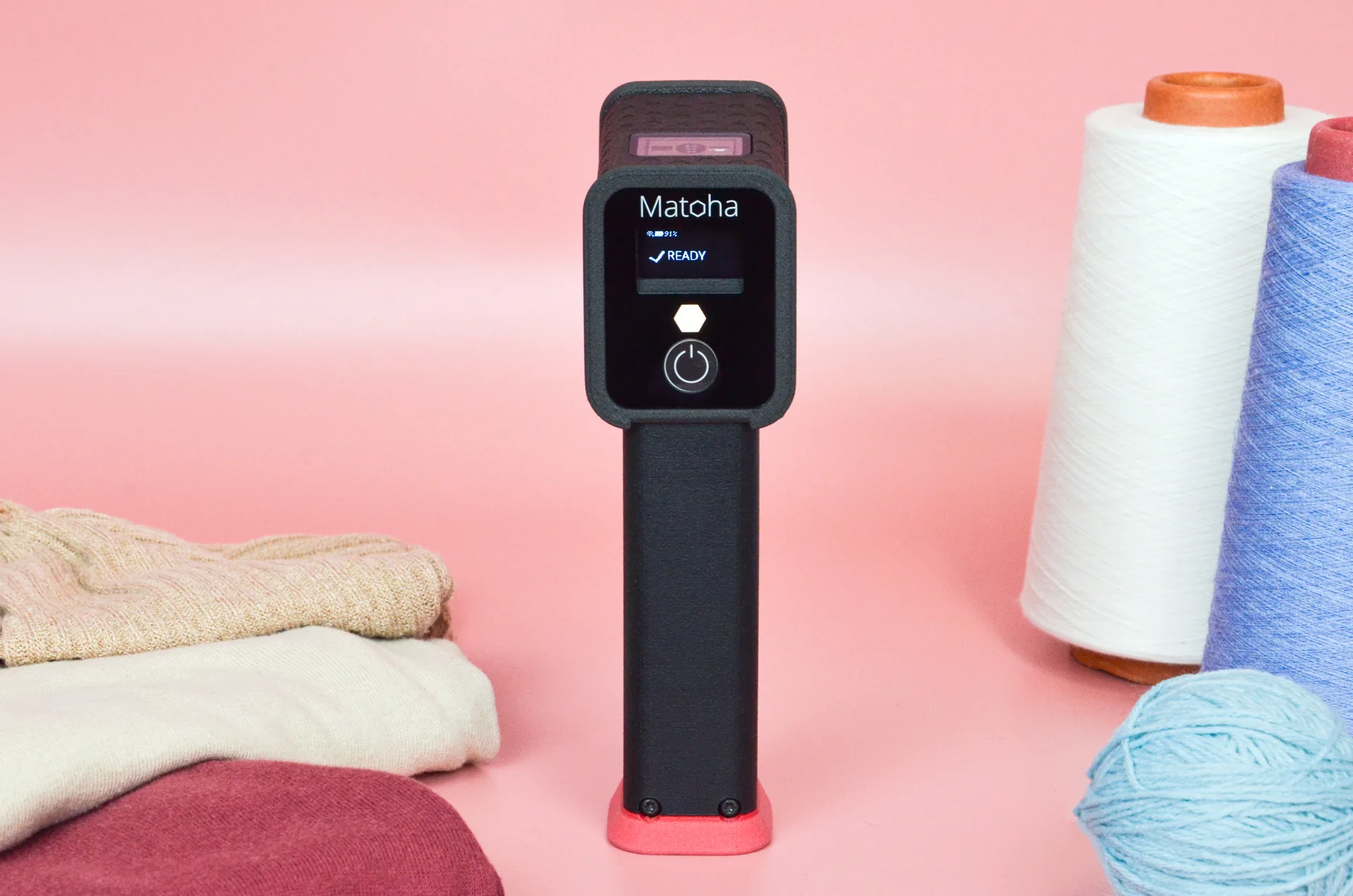
Charity shops and donation centres often rely on volunteers who come in a few hours a week, there's no time to build years of fibre-identification experience.
A wool jumper sorted as "synthetic mixed rag" by mistake earns a fraction of what it could have, or gets sent down the wrong stream entirely.
Grant reports and corporate textile-recovery partnerships increasingly ask for composition data on what was processed, not a rough percentage from memory.
Sending samples out for composition testing is rarely realistic on a charity operating budget.
Scan, read the colour-coded result, sort. No textile background needed, a new volunteer is productive on day one.
FabriTell identifies the actual fibre composition, so high-value materials go where they're worth the most instead of into the general rag stream.
Matoha Cloud logs every scan and exports to Excel or via API, giving you real composition data to report to funders, councils, or corporate partners.
No per-sample lab fees. A single FabriTell device handles unlimited scans for the life of the device.
An NGO partner uses 10 FabriTell devices to audit textile waste streams, recording composition data through Matoha's mobile app and exporting results in Excel-friendly formats for reporting and analysis.
| Factor | Sorting by feel / experience | FabriTell-assisted |
|---|---|---|
| Time to identify fibre content | Variable, experience-dependent | < 1 second per scan |
| New volunteer ramp-up time | Months to build reliable judgement | ~30 minutes to operate the device |
| Composition data for reporting | Estimated / not recorded | Logged automatically, exportable to Excel/API |
| Cost per item tested | Lab testing: per-sample fee | £0 marginal cost after device purchase |
| Device cost | — | £4,199 one-off, or from £199/mo + device from £849/mo |
Identification speed (<1 second) is from FabriTell's published device specification. The "10 devices" deployment is a real, documented NGO case study; figures for training time and ramp-up are general device-onboarding estimates, not from that specific case study.
Low-cost entry, no infrastructure changes, simple enough for rotating volunteer teams. The choice for most charity shops and donation centres.
From £4,199 one-off · or from £199/mo + device from £849/mo · volume pricing available for multi-device deployments
For NGOs running high-volume textile banks or sorting centres, S-Bench standardises grading and identification into one workflow.
Pricing on request — talk to our team
Automated sorting for the largest collection networks. In development, not yet available to order.
Talk to us about charity and NGO pricing, multi-device deployments, and grant-friendly procurement.