In the FieldReal devices,
Real devices,
real sorting lines
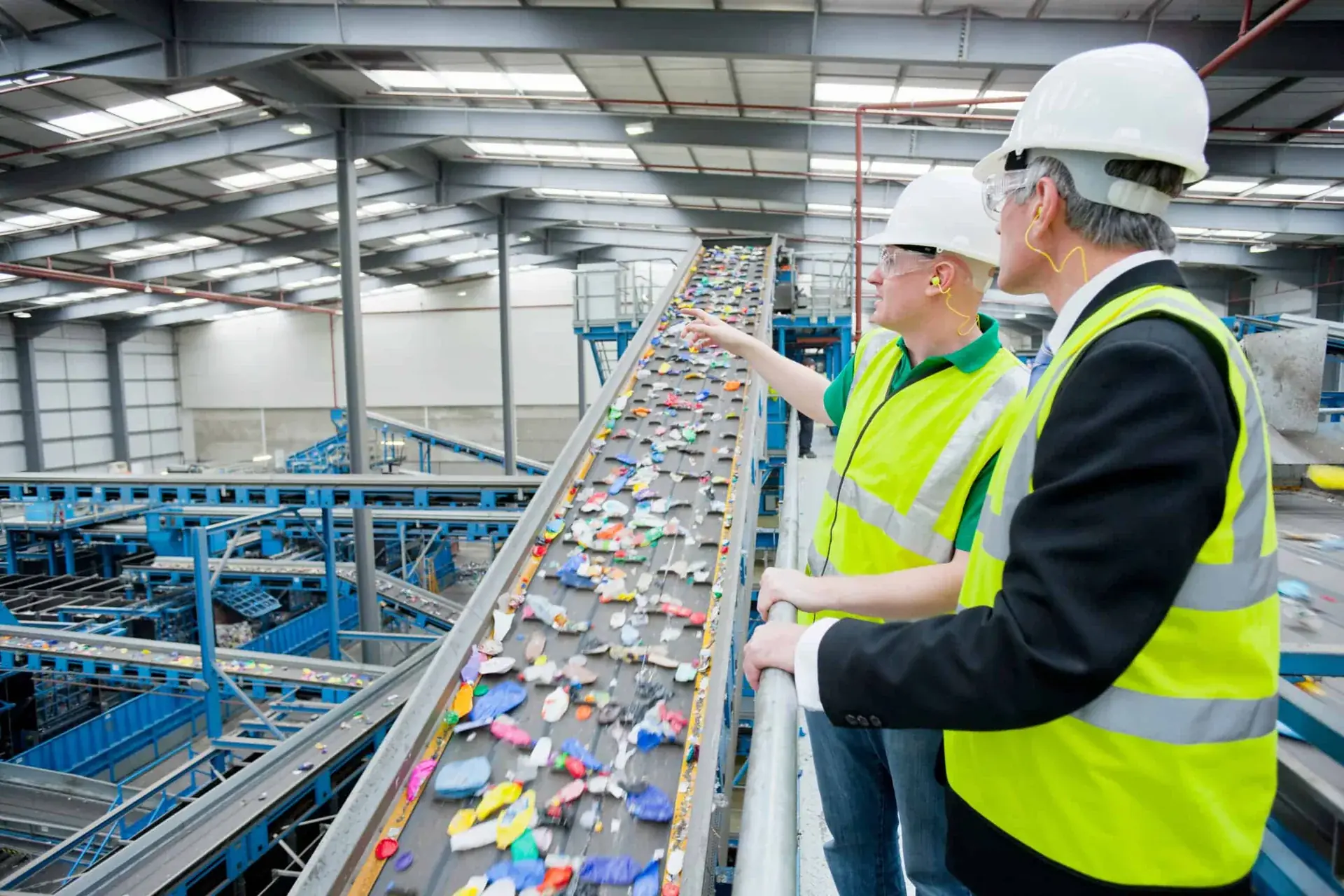
HDPE, LDPE, PP, PVC, PET, the same colour, similar texture. Contamination rates of 5–15% are common in manual sorting, making bales unsellable at premium prices.
Clear PET, clear PP, and PVC are notoriously difficult. Standard NIR reads the background colour, not the polymer. Most devices report "unknown" for transparent items.
The resin identification code (♳–♷) is legally voluntary in many markets and frequently absent or incorrect on packaging. Visual checks are unreliable.
End-of-waste criteria in the UK and EU require documented proof of polymer composition. Without digital data, your recycled material can't move across borders as R-grade material.
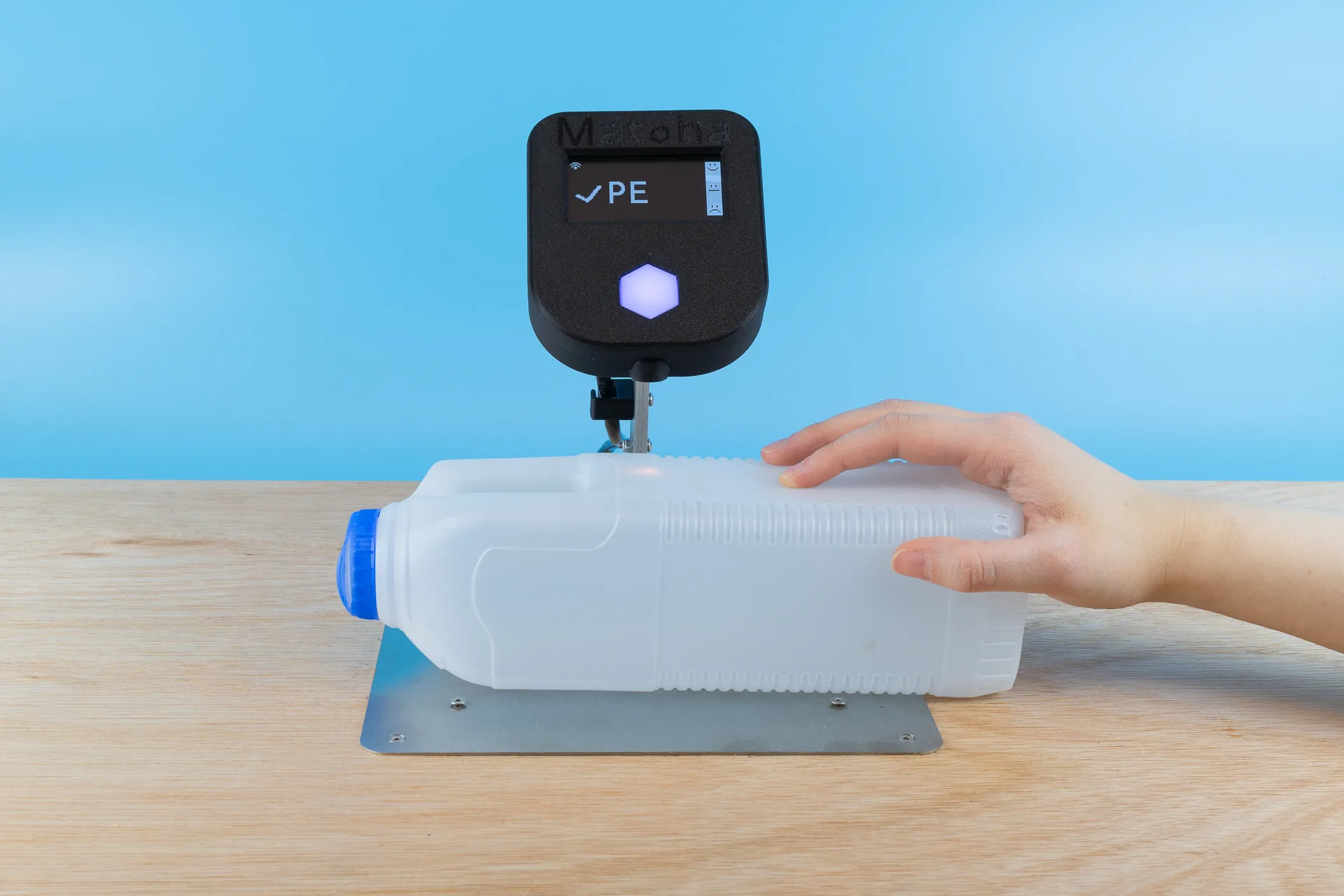
PlasTell identifies both transparent and opaque plastics, including dark and carbon-black-filled materials. No more "unknown" results on clear or black items.
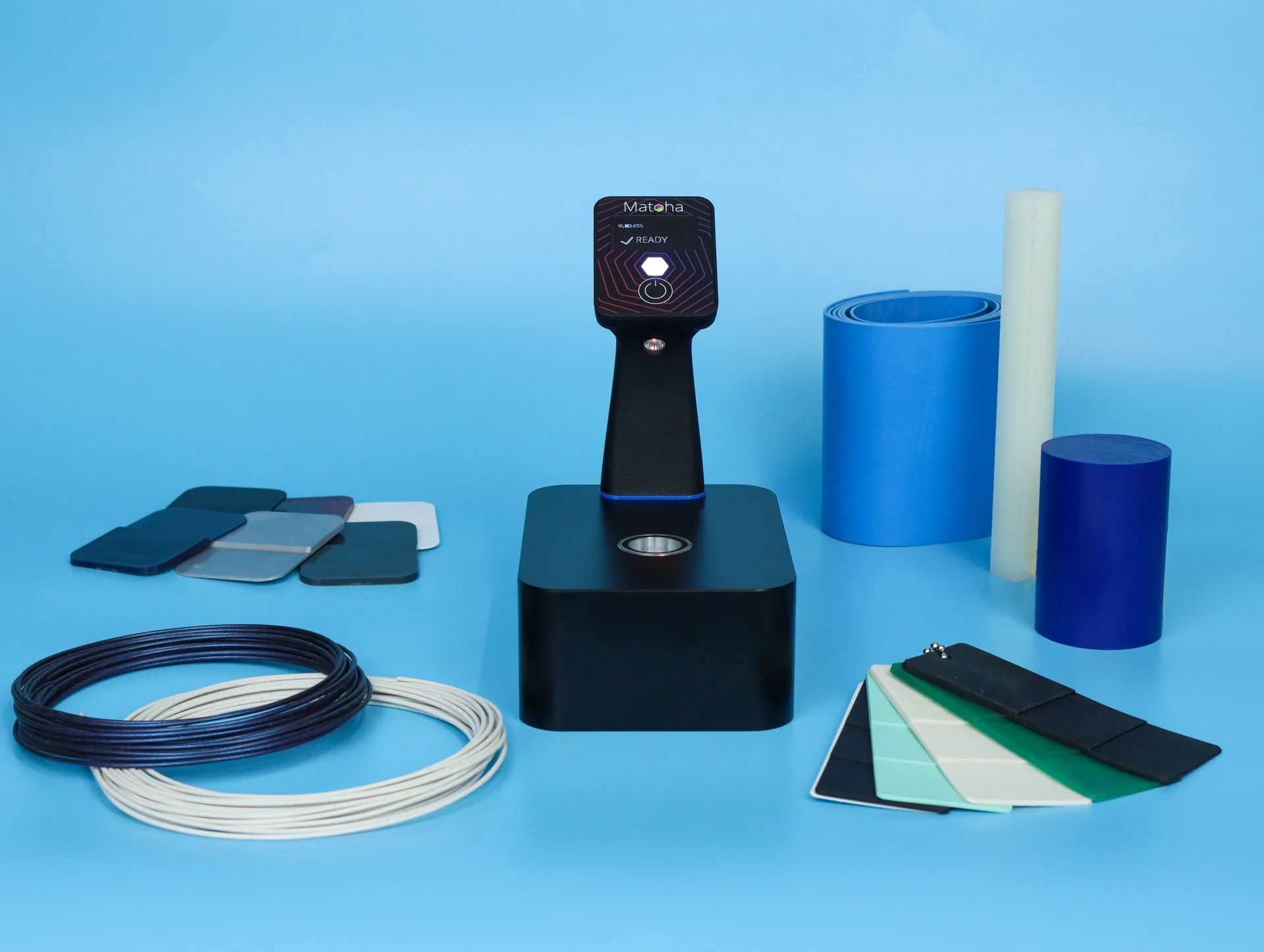
PET, HDPE, LDPE, PP, PVC, PS, ABS, PC, Nylon, and 15+ more. The fastest plastic identification on the market, twice the scan rate of competing devices.
Set colours for your sorting categories. PET = green, HDPE = blue, reject = red. Sorters need zero polymer knowledge, colour tells them everything.
Every scan logged. Export batch reports showing polymer breakdown by weight and count. Accepted by compliance auditors and downstream buyers.
Operator picks up the item from the sorting floor, tipping area, or incoming goods pile. PlasTell is handheld, it goes to the material, not the other way around. No conveyor integration required.
Press the device against any surface. NIR reads through both opaque and transparent materials, capturing the polymer signature without contact contamination.
Colour feedback matches your bin labelling. High-throughput facilities report 400–600 items/hour per operator with trained staff.
Matoha Cloud gives supervisors a live view of what's flowing through, polymer split by hour, by operator, by shift. Instantly spot contamination spikes.
At bale completion, export a PDF or Excel certificate showing scanned composition. Send to downstream buyer or compliance authority with one click.
Reduce contamination in outgoing bales. Increase gate price on PET, HDPE, and PP streams. Get compliance data without halting production.
Verify incoming shipments against purchase order polymer spec. Reject contaminated loads before they arrive at your facility with pre-receipt cloud scanning.
Incoming QC on regrind and recyclate. Verify PCR content from suppliers. Ensure production-line material consistency without lab delay.
Identify ABS, PP bumpers and dashboards. Recover high-value engineering polymers from shredder residue that would otherwise go to landfill.
Identify PVC window frames, PE piping, and PP profiles in mixed construction waste. Separate material at demolition stage before contamination makes recovery uneconomical.
Rapid screening of samples before full XRF or wet-chemistry analysis. Eliminate 80% of samples from full testing by screening with PlasTell first.
See PlasTell identify polymers in a live demo, how it works, what the results look like, and how it fits into your sorting process.