In the FieldReal devices,
Real devices,
real sorting lines
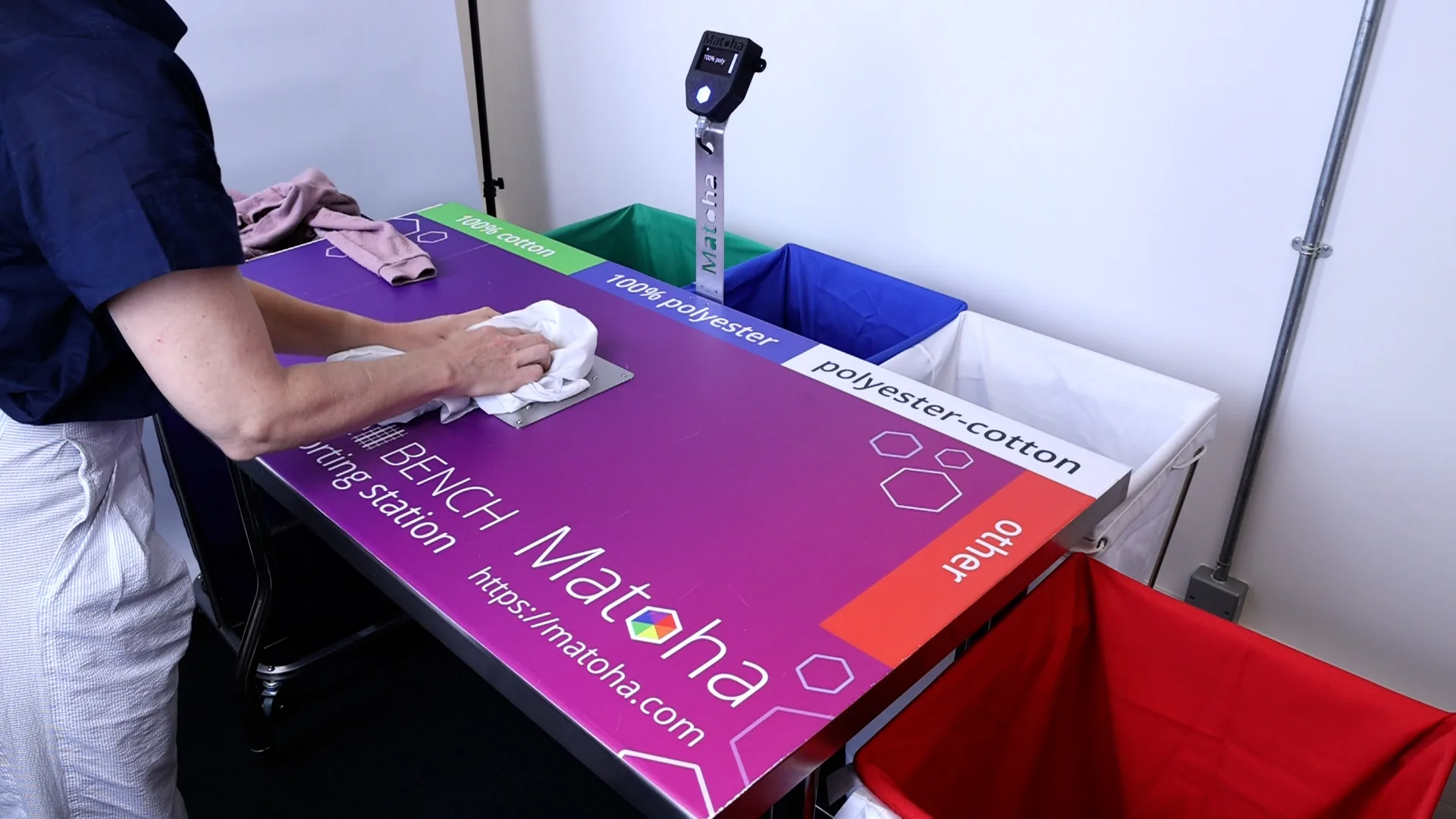
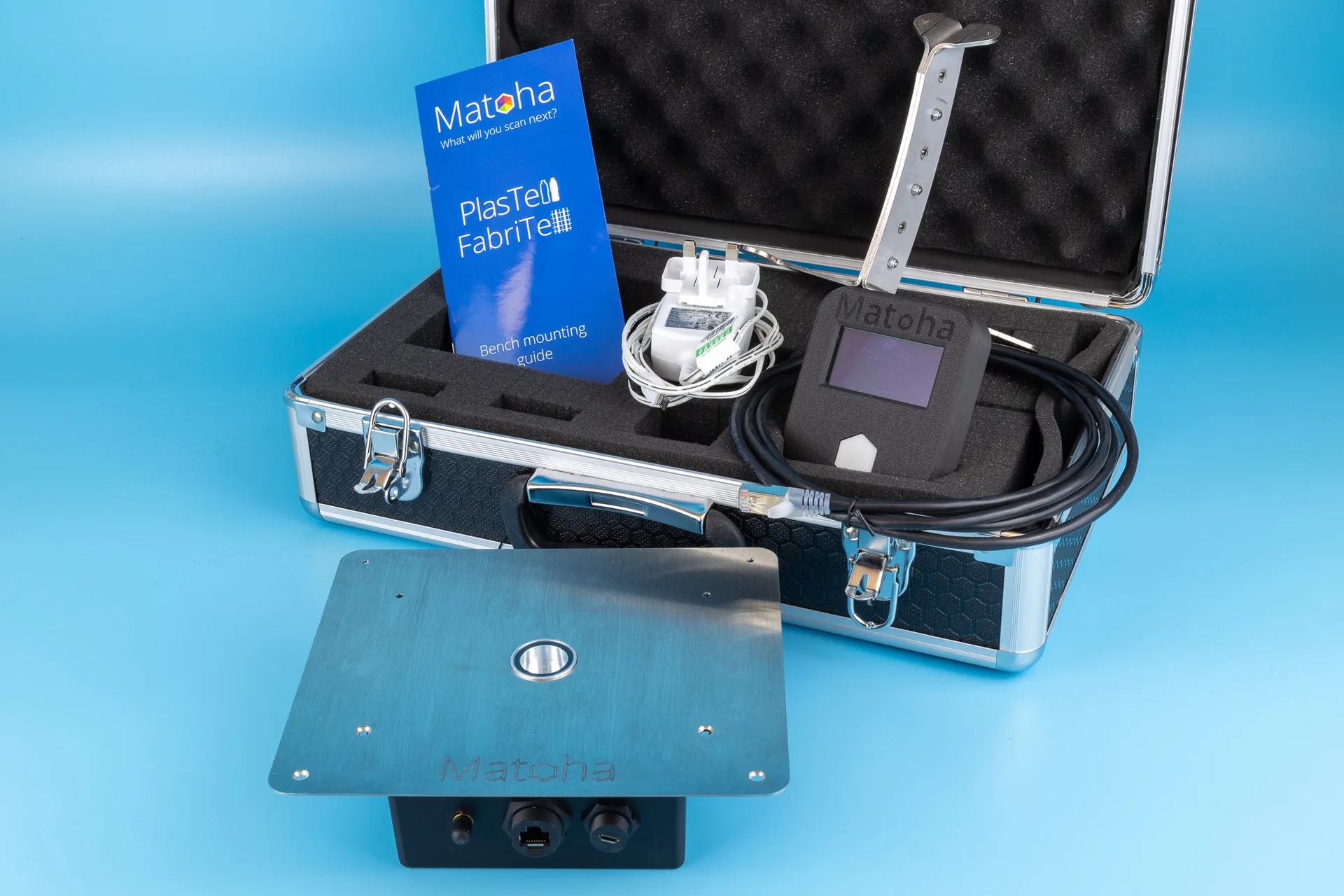
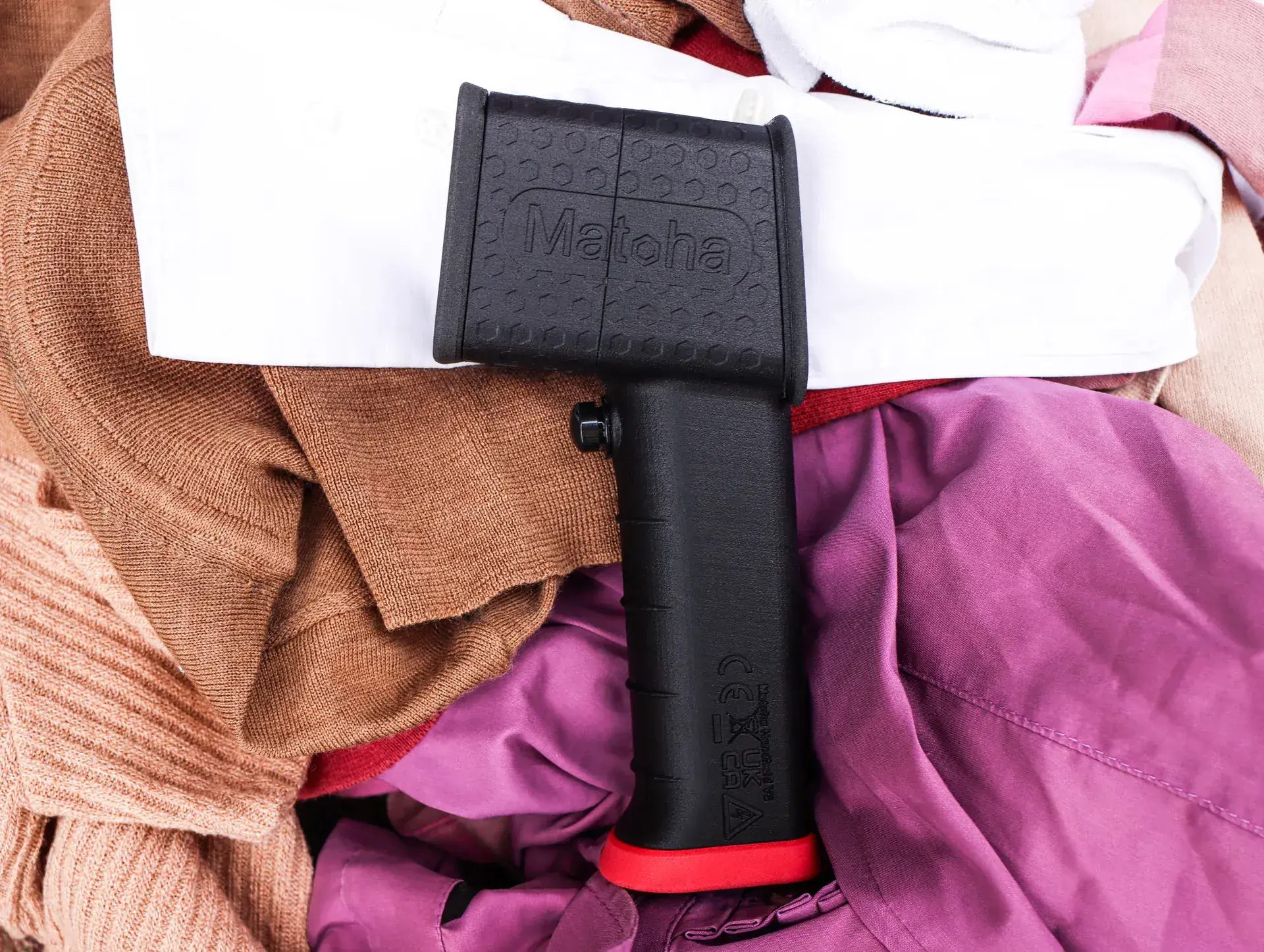
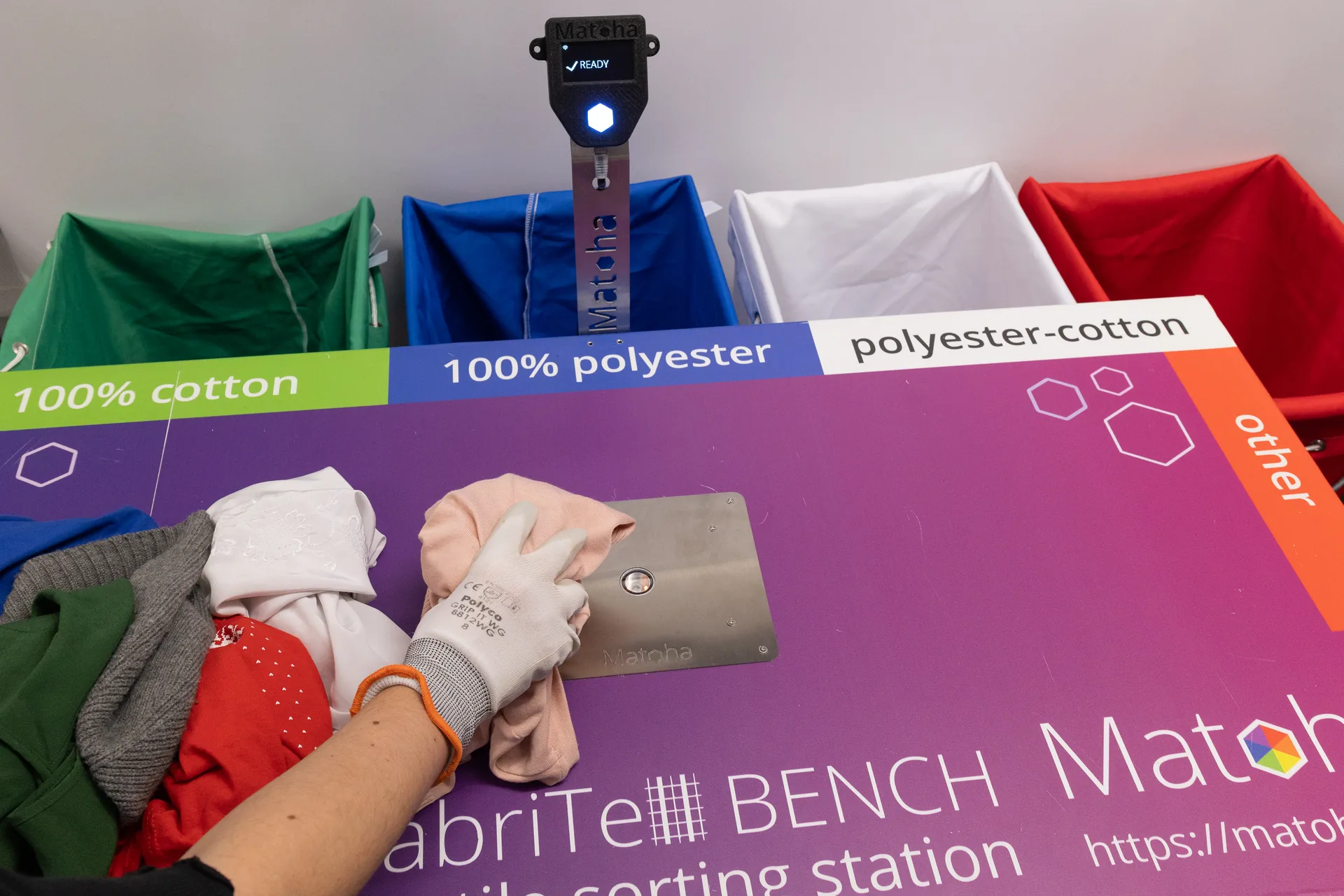
Fibre type is the start, not the end. Grading, weighing, routing, and recording each add their own seconds, and their own training requirement, to every single garment.
Reliable fibre identification by feel is a skill built over years of experience. New hires sort slowly and inconsistently until they reach that point, if they stay that long.
More volume traditionally means more sorters, more training, and more floor space, capex and opex that grow in lockstep with throughput.
Manual sorting produces a sorted pile, not a data trail. When a buyer disputes a bale's composition, you have no scan-level evidence to point to.
A new operator learns to place a garment on FabriTell and read the LED in about 30 minutes. Fibre composition in under 1 second, no fibre knowledge to memorise.
AI grading cameras, an integrated FabriTell NIR sensor, weighing scales, and barcode/RFID scanning combine into one station, making one trained operator as effective as 3–4 manual sorters.
Where S-Bench makes one operator more effective, FabriBot is built to automate sorting by material and colour entirely, more capacity without more floor space or more headcount.
Matoha Cloud timestamps every scan with operator, material result, and (on S-Bench) weight and photo, one reporting layer underneath whichever devices you run. Disputes get resolved with a data export, not an argument.
| Factor | Manual sorting (burn test / by feel) | FabriTell / S-Bench |
|---|---|---|
| Identification time per item | Burn test: several minutes; "by feel": instant but unreliable | < 1 second |
| Operator training time | Months to reach expert-level accuracy | ~30 minutes to operate the device |
| Throughput per operator (S-Bench) | 1× baseline | 3–4× baseline* |
| Blend composition visibility | Not measurable by eye or burn test | Measured to 1% increments, ±10% typical accuracy |
| Audit trail per item | None | Logged automatically to Matoha Cloud |
| One-off device cost | — | £4,199 (FabriTell) · S-Bench priced on request |
Actual throughput gains depend on your existing process, garment mix, and facility layout, talk to our team and we'll benchmark against your real sorting line.
Pick where you are today, handheld, station, or full automation, and grow into the next tier without replacing what you already have. Matoha Cloud ties all three together.
Add identification to your existing manual sorting line without changing your layout. Each sorter scans, reads the LED, places the garment. Best for facilities testing NIR sorting for the first time or with limited capex.
From £4,199 one-off · or from £199/mo + device from £849/mo
A complete sorting workstation: AI grading cameras, integrated FabriTell NIR sensor, weighing scale, RFID/barcode scanning, and a 13" touchscreen. Built for facilities ready to standardise grading and identification in one station.
Pricing on request — talk to our team
Automatic sorting by material and colour, ultra-compact, designed to run 24/7 without a new building or major retrofit. Digital Product Passport-enabled via RFID. Currently in development, not yet available to order.
☁️ Every device reports into Matoha Cloud, so handheld, S-Bench, and (eventually) FabriBot data live in one place, even as you mix and grow across tiers.
Programme LED colours, manage device settings, and view results from a free iOS/Android app, no separate software licence.
Set the rule once, e.g. "polyester >70% = blue, else red", and every operator follows colour, not composition knowledge.
FabriTell Handheld runs up to 12 hours on a swappable battery, a full shift without a charging break.
We'll walk you through a live demo of FabriTell on S-Bench, how to scan, what throughput looks like, and how it integrates into your sorting line.