Walk through the void process at most social housing providers and you'll see the same thing: carpet stripped out during refurbishment, thrown into a skip, and collected as general waste or mixed landfill material. It's fast, it's practical, and it's costing the sector money it doesn't need to spend, as well as generating waste that doesn't need to go to landfill.
The reason most void carpet ends up in landfill isn't that it can't be recycled. Polypropylene carpet has viable recycling routes. Nylon carpet, particularly PA6, has well-developed chemical and mechanical recycling processes. The reason it ends up in landfill is simpler: without a fast way to identify what the carpet is made of, contractors can't make a reliable diversion decision in the time available.
The scale of the opportunity
Social housing providers in the UK manage large property portfolios, some running to tens of thousands of homes. Void rates (properties requiring refurbishment between tenancies) vary, but even conservative figures suggest significant carpet volumes are handled annually across the sector. The majority of that carpet is PP or nylon, both of which have recycling routes if they can be identified and segregated.
The volume creates an opportunity: if even a fraction of void carpet currently going to landfill could be diverted to recycling, the aggregate environmental benefit and landfill cost saving is meaningful. And as landfill tax rates continue to rise, the commercial case for diversion improves every year.
With landfill tax at over £100 per tonne in the UK and rising, the difference between landfilling and recycling carpet, where viable routes exist, is a direct cost saving, not just an environmental preference.
Why the current process doesn't divert
Void works contractors are operating to tight turnaround schedules. The property needs to be cleared, cleaned, and made ready for the next tenancy, typically within a defined window. Adding any step that slows the process creates pressure on contractors who are already working to time.
Manual carpet identification, feeling the pile, checking backing, looking for label remnants, takes time and is unreliable on stripped carpet that has been down for years. Without a fast, definitive identification, the default is the skip. It's the decision that takes least time and introduces least risk of getting it wrong.
This is exactly the problem that a handheld NIR device addresses. CarpeTell gives a fibre identification in under a second, without any sample preparation. A contractor can scan a piece of carpet during strip-out, before it goes in the skip, and make a routing decision based on an actual reading rather than a visual guess.
What the routing decision enables
Once you know what the carpet is made of, the routing options open up. PP carpet and nylon carpet can go to separate loads, directed to processors that accept each type. The alternative, mixed carpet, undifferentiated, has limited recycling options and typically ends up as refuse-derived fuel or in landfill.
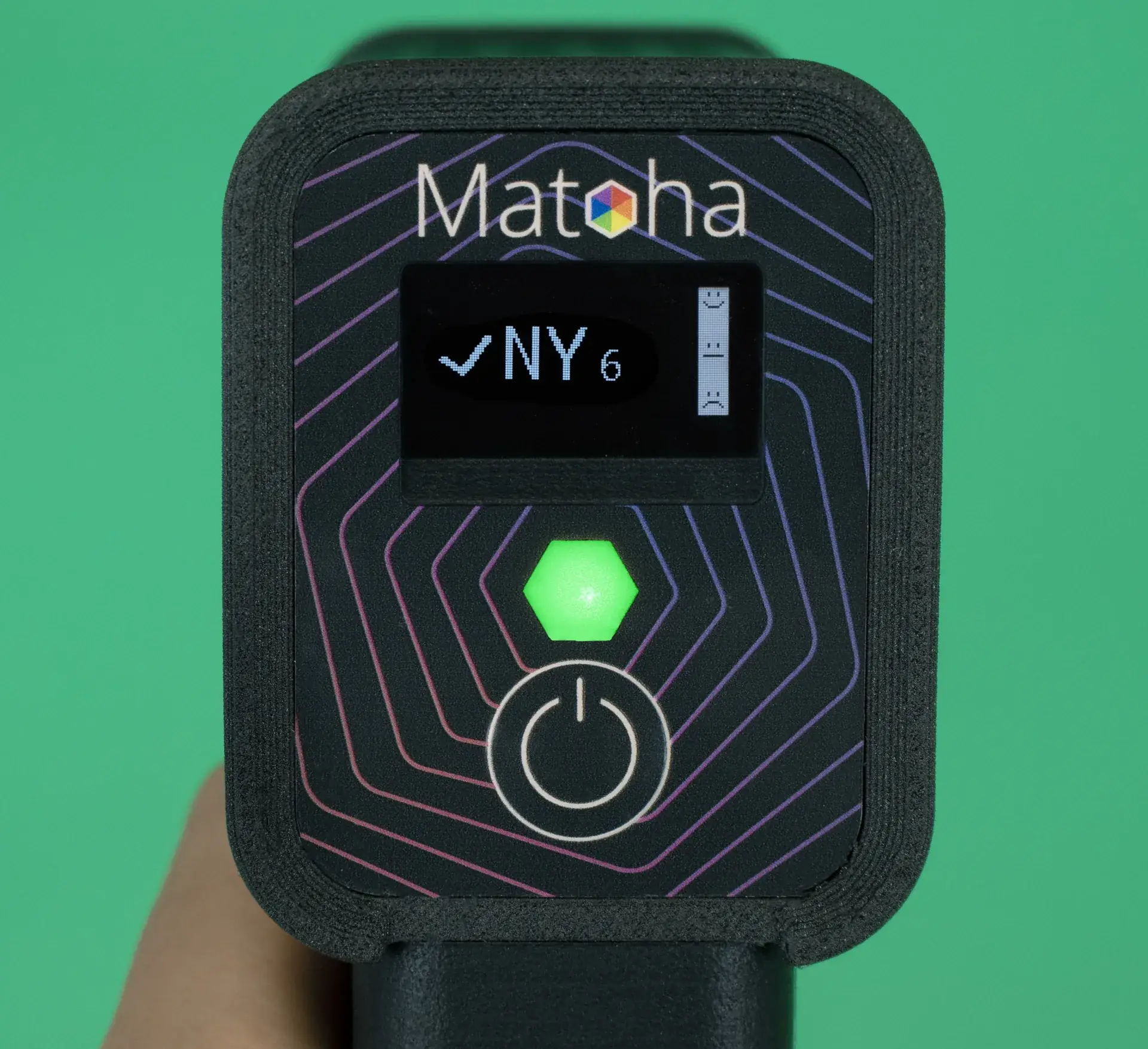
Green LED: Nylon 6 confirmed.
CarpeTell gives sorters a definitive answer in under a second.
The segregation doesn't require a dramatic workflow change. It requires a scan at the point of strip, one second per piece, and a decision about which load the roll goes to. That's a meaningful addition to a contractor's process, but it's not the kind of thing that doubles void turnaround time.
Operations that have piloted this approach report that contractor buy-in is generally achievable once the process is simple enough, particularly when the social value reporting benefits are made visible to property management teams.
The social value reporting angle
This matters increasingly for registered providers. Social Value requirements in housing association operations, procurement decisions, and Regulator scrutiny mean that documented environmental impact is becoming a business-as-usual expectation, not an optional extra.
A scan-level record of void carpet identified, routed, and diverted from landfill, with tonnage estimates by property, gives sustainability teams the kind of defensible evidence that board reports and Regulator returns increasingly require. "We diverted X tonnes of carpet from landfill this year" is a more credible statement when it's backed by identification records and recycler receipts than when it's an estimate.
What a practical pilot looks like
For social housing providers or their principal contractors who want to test this, a practical starting point is usually a single site or a single contract, enough void properties to generate meaningful carpet volume over a quarter, with one or two trained operatives using CarpeTell Handheld during strip-out.
The data from that pilot, identification records, diversion tonnage, destination, gives the evidence base for a business case to roll out across a broader programme. It also identifies which contractors engage well with the process and which need more support or different workflow integration.
The technology is the straightforward part. The more significant work is the contractor training, the logistics of separate collection, and the relationships with recycling processors who will take segregated carpet. Those elements take time to establish, which is why starting with a contained pilot, rather than waiting for a full programme design, is usually the practical way in.