Black Plastic and the Recycling Identification Problem, How NIR Helps
Black plastic has frustrated recyclers for years, it's opaque to traditional optical sorting. Near-infrared spectroscopy approaches the problem from a different angle entirely.
Black plastic is a well-documented problem for the recycling industry. The carbon black pigment used to produce black plastics absorbs the near-infrared wavelengths that most automated sorting systems rely on for polymer identification. The result: sorting lines that can identify clear, coloured, and white plastics by type often see black plastics as unidentifiable, and route them to residue, mixed streams, or landfill.
This is a significant waste problem, and it's concentrated in product categories where black plastic is common: electronics casings, automotive parts, food packaging, and garden furniture among others.
Why Colour-Based Sorting Fails on Black Plastic
Why traditional optical sorting struggles with black
Most large-scale plastic sorting infrastructure uses NIR-based conveyor systems that rely on reflectance at specific wavelengths to identify polymer type. Carbon black absorbs these wavelengths rather than reflecting them, which means the sensor receives no usable signal from the material. The item registers as unidentifiable and drops to the reject stream.
Some systems attempt to compensate through colour-based identification first, but colour tells you nothing about polymer type. A black food tray could be PET, PP, PS, or PVC. The colour is the same. The recycling value and recyclability are very different.
Estimates of how much black plastic ends up in landfill or incineration rather than being recovered vary widely by market, but the industry consensus is that it represents a meaningful fraction of plastic that could theoretically be recycled, if it could be identified.
What NIR can and can't do with black plastic
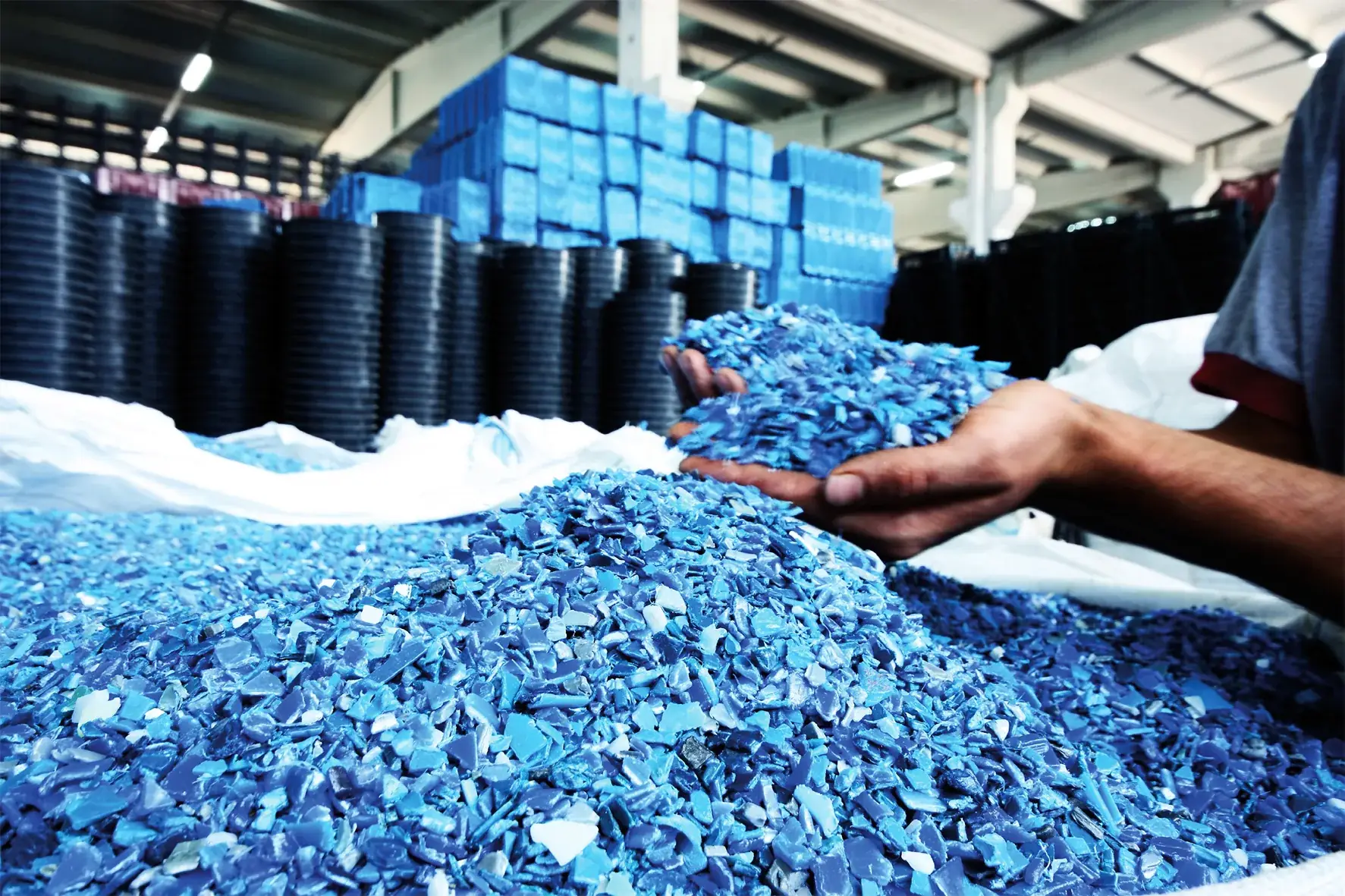
High-purity plastic granulate: the output quality depends on what goes in. Accurate identification at every stage matters.
Standard NIR instruments, including PlasTell, cannot identify plastics that contain carbon black pigment. The same absorption problem that defeats optical sorting also affects NIR: the pigment absorbs the near-infrared wavelengths before they can produce a usable reflectance signal. This is a known limitation of NIR technology across the industry, not a gap unique to any single device.
Where NIR does provide substantial value is in identifying the full range of transparent, coloured, and non-black opaque plastics, the majority of the plastic waste stream by volume. PlasTell identifies 25 polymer types across those categories. For operations where black plastic is only a portion of intake, accurate identification of everything else has a direct impact on bale quality and material value.
Understanding what NIR cannot do is as useful as knowing what it can. If black plastic identification is your primary requirement, we'll say so clearly before a demo, and point you to what NIR realistically helps with in your stream.
The most common use cases we see for handheld NIR in plastic recycling are:
Incoming bale verification: Understanding the composition of what's arriving before it enters your process, particularly relevant when buying mixed bales from municipal or commercial sources. Coloured and transparent plastics can be confirmed; black items remain unidentifiable.
Sorting floor triage: Giving operators a fast check on ambiguous non-black items. Distinguishing PP from PET from PVC visually is difficult. NIR makes it reliable for clear and coloured plastics.
Quality control before baling: Scanning a sample from each bale before it leaves the facility to confirm polymer composition matches what you're selling it as, essential where buyers are running their own QC on arrival.
E-waste processing: Electronics contain a wide range of engineering plastics, ABS, PC, HIPS, PS, and others. Many are black or dark-coloured, which limits NIR. But transparent and light-coloured engineering plastic components can be identified and segregated by type, which has significant value per tonne.
The broader context: why the black plastic problem persists
Black plastic's challenge for recycling runs deeper than just identification. Even where downstream processors could theoretically sort and recycle black plastic by polymer type, the commercial infrastructure often isn't set up to take it as a separated stream, because until recently, so little of it arrived identified and separated.
Better identification of the plastics that NIR can handle, raising the quality and reliability of those streams, supports the broader goal of making recycled plastic commercially competitive with virgin material. Black plastic remains a separate challenge requiring different technical approaches, but improving the rest of the stream is a concrete and achievable step.
If you're operating in a context where black plastic is a significant fraction of your intake, the most useful first step is to understand what proportion of your stream it actually represents, and what the rest of the stream is worth if identified and sorted correctly.
Why choose a subscription over a one-off purchase?
+
A subscription spreads the cost into predictable monthly payments, includes software updates, and can be easier to justify as an operating expense rather than a capital purchase. A one-off purchase gives you full ownership with no ongoing fees. Both options include access to the Matoha app and Cloud dashboard. Compare options →
How long is the contract for subscriptions?
+
Subscription terms vary by plan. Please contact us for current contract lengths and flexible options — we can often accommodate rolling monthly or annual arrangements depending on your needs.
What is the cancellation policy?
+
One-off purchases come with a 21-day money-back guarantee — if the device doesn't work for your materials, return it for a full refund. For subscription plans, cancellation terms are outlined in your agreement. Get in touch if you have any questions.
How long does delivery take?
+
FabriTell, PlasTell and CarpeTell handheld devices ship within approximately 60 days of order. The S-Bench system has a longer lead time due to custom configuration — contact us for current availability. We ship worldwide.
Can I try before I buy?
+
Yes — we offer a live demonstration where we scan samples you send in advance, so you can see results on your own materials before committing. All devices also come with a 21-day money-back guarantee. Book a demo →
Do the devices work without an internet connection?
+
Yes — all Matoha devices identify materials fully offline. The AI runs on-board, not in the cloud. Wi-Fi is only used for syncing scan data to Matoha Cloud and receiving firmware updates, both of which are optional.