Ask any experienced textile sorter what the hardest fibre to identify reliably is, and most will say silk, or cashmere. Both sit at the top of the value chain. Both are regularly present in second-hand streams. And both are frequently misidentified as cheaper fibres because they share enough visual and tactile properties with viscose, polyester satin, and synthetic blends to fool even experienced hands under sorting-floor conditions.
This isn't a criticism of sorters. It's a structural problem with visual identification of ambiguous fibres at speed.
Why silk is hard to identify by eye
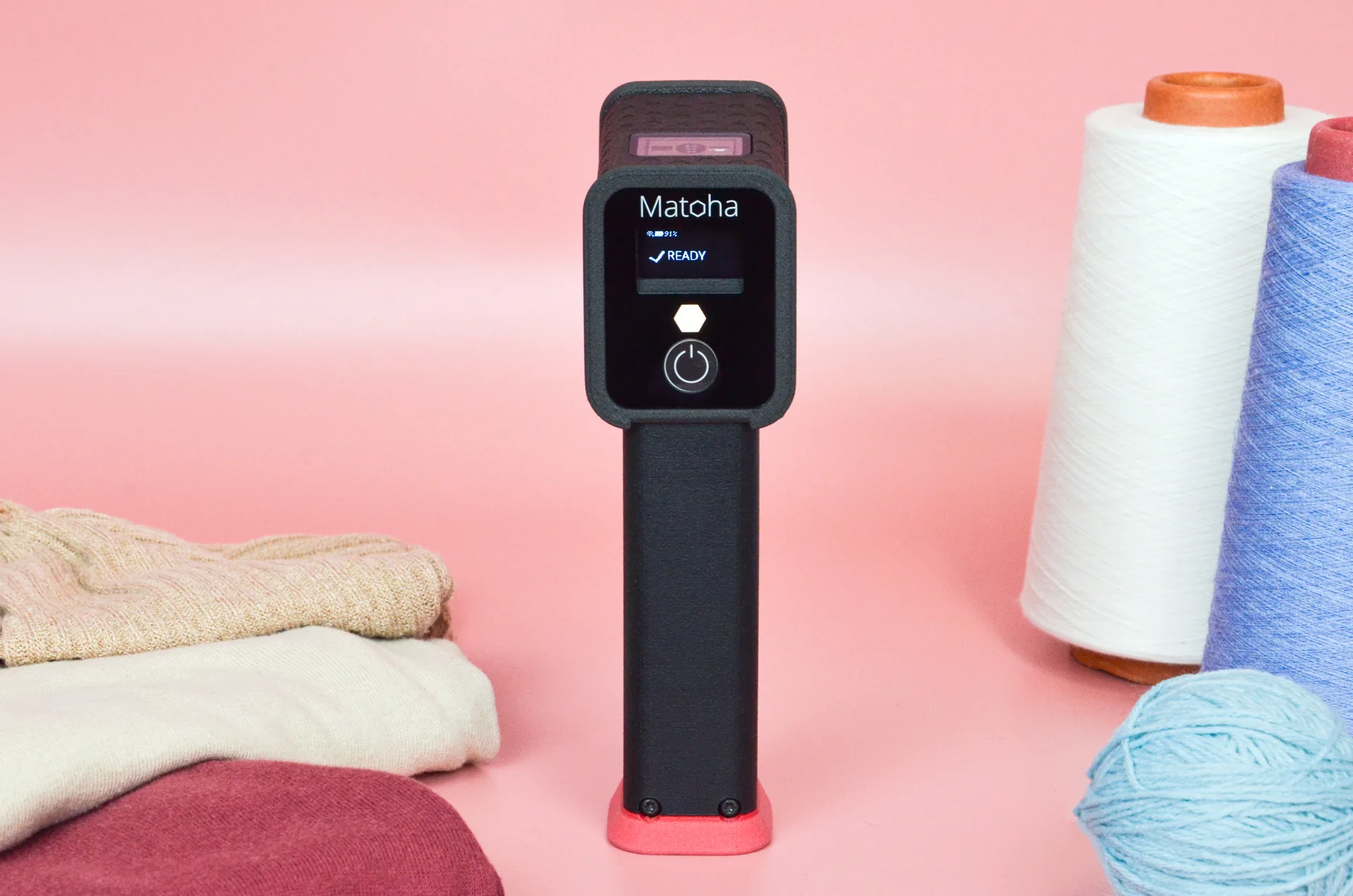
FabriTell distinguishes silk from viscose, polyester satin, and blends, in under a second.
Silk and high-quality viscose can feel almost identical, both have a characteristic drape and sheen. Under poor lighting, or when handling 400 items per shift, the differences that a lab test would catch clearly become much harder to call reliably. Polyester satin adds another layer of confusion. Blends containing silk with viscose or polyester can be genuinely indistinguishable without an objective test.
The burn test, still used in some operations, can help distinguish protein fibres from synthetics, but it's slow, requires the sorter to stop, and is not suitable for high-throughput lines. It also doesn't reliably distinguish silk from wool in all cases.
The visual test is good enough for easy cases. It's the ambiguous 15% where the value leaks. A fast NIR check on anything that isn't obviously polyester or cotton can change the economics of those decisions significantly.
The commercial case for getting it right
The price difference between silk and viscose in second-hand or recovered material is substantial. Operations selling high-value fibre bales to specialist buyers rely on composition claims being accurate, and buyers are increasingly testing on delivery rather than accepting declarations at face value.
When silk ends up in a mixed viscose or polyester-satin bale, the loss is double: the value at the silk end (lost from the silk buyer's tonne) and the contamination risk at the other end (a viscose buyer who finds protein fibres in their bale has a problem).
Conversely, when viscose gets incorrectly pulled into the silk stream, the composition of your high-value bale is diluted, creating a buyer quality issue that's harder to defend than a simple composition error.
Where NIR changes the identification
Near-infrared spectroscopy identifies the molecular composition of a fibre, not its visual or tactile properties. Silk, viscose, wool, polyester, and their blends produce distinctly different NIR absorption patterns. The device doesn't have to make a judgement call about sheen or handle. It reads what the material is made of and reports accordingly.
For a sorter working through a mixed stream, this means any item that looks ambiguous, anything that could be silk, viscose, or a blend, can get a one-second NIR check before it goes to a bin. The throughput impact is minimal. The value recapture on correctly identified silk items can be significant.
Sorters using FabriTell in second-hand or recovered textile operations frequently tell us that the first surprise is how often the visual call was wrong, not on the obvious items, but on exactly the ambiguous category that silk falls into. The second surprise is usually how many of those items were going to the wrong bin before.
Beyond silk: the case for high-value fibre identification generally
Silk is the most discussed example, but the same logic applies to cashmere, fine merino, and linen in many markets. The category of "items that look like something valuable but might not be" is larger than most operations appreciate until they start measuring it.
Wool blends are another common source of mis-sort loss. A garment that is 80% wool and 20% nylon is not the same as 100% wool, and the price difference matters to specialist buyers. Visual identification of blend ratios is essentially impossible at sorting-floor speeds. NIR gives you a reading on blend composition that a trained eye simply cannot.
FabriTell identifies 10 pure fibre types and 13 blends, including silk, wool, and fine blends, in under 1 second. It's designed to work at the pace of a sorting line, not a laboratory.
A practical approach for most operations
You don't need to scan every item to capture most of the value. Most operations find that concentrating NIR identification on the ambiguous category, anything that isn't obviously polyester or cotton, and on all items above a certain apparent value level captures the majority of mis-sort opportunity without requiring a complete workflow change.
That's the practical point: NIR isn't a replacement for experienced sorters. It's a check on the decisions where experience alone isn't enough. And in most textile streams, that category is bigger than most people initially assume.